Showing posts with label plastics. Show all posts

Thursday, October 28, 2010

BPA to sperm: DROP DEAD


According to the latest reports from people in White Coats, workers in Chinese factories that process BPA-laden products had two to four times lower quality sperm, including lower sperm counts, than workers in factories that don't deal with BPA. Those with the worst sperm also had the highest levels of BPA.

The report was published by the Journal of Fertility and Sterility. Oddly, the article The impact of luteal phase support on gene expression of extracellular matrix protein and adhesion molecules in the human endometrium during the window of implantation following controlled ovarian stimulation with a GnRH antagonist protocol, also in the current issue, hasn't generated any press coverage.

Asked to comment on the possibility that BPA can lower sperm counts, study author Dr. De-Kun Li simply responded "That can't be good."

BPA apologist and spokesperson for the American Chemistry Council Stephen Hentges probably had the same thought. However, he is quoted in media reports as saying "This study of Chinese workers with high exposure to BPA is of limited relevance to consumers who, by contrast, are exposed to only very low levels of BPA."

"I mean is there really an American consumer who worries about the welfare of factory workers who make their cheap consumer crap?" Hentges inferred but did not actually say.

Li, who isn't on the BPA industry payroll had this to say:

"When you see this kind of association with semen you have to wonder what else BPA has an effect on," says Li. As a precautionary principle, he adds, "Everybody should avoid BPA as much as you can."


Friday, September 3, 2010

Reusable shopping bags will kill you


A recent study by some guys in white coats at the University of Arizona warns that those nifty reusable shopping bags (like the 20 or so I have in my trunk) are teaming with bacteria.

The researchers tested 84 bags collected from shoppers in Tucson, Los Angeles and the San Francisco Bay Area and found that just over half were contaminated with potentially harmful bacteria. Twelve percent of the bags contained E. coli, which indicates possible fecal matter and more dangerous pathogens.


According to the study co-author Charles Gerba, using a reusable bag is on a par with having your family play Russian Roulette (how do those Russian casinos keep attracting customers anyway?):

Well, it's sort of a random chance," he said. "Sometimes, there may be enough. Sometimes, there may be not. You're really always gambling with germs."


The biggest problems arise from people stuffing dripping hunks of raw meat into their bags and then leaving them in the trunk for a while.

Unacceptable alternatives include chopping down forests to create paper bags, and despoiling our pristine wetlands with offshore oil drilling to make toxic plastic bags. The study authors (who, incidentally, got $30k from the American Chemistry Council to conduct their research), recommend soaking bags overnight in Purell, or just skipping the bags entirely and stealing the store's shopping carts.

Tuesday, November 3, 2009

Bisphenol A Now In Cans!


I've previously reported on that nasty stuff Bisphenol A (also known as BPA) that poison-mongers like to slip into plastic stuff like baby bottles.

Since I can never remember which number on the bottom of my cereal bowl is supposed to be okay, and which is supposed to consign me and my offspring to a slow, torturous death, I have switched the family to eating everything out of tin cans (well, aluminum).

Bad move.

According to a new study by people in White Coats at Consumer Reports, the

latest tests of canned foods, including soups, juice, tuna, and green beans, have found that almost all of the 19 name-brand foods we tested contain some BPA. The canned organic foods we tested did not always have lower BPA levels than nonorganic brands of similar foods analyzed. We even found the chemical in some products in cans that were labeled "BPA-free."


Now if you can't trust a label on a can, what can you trust???

According to the Civil Eats blog,

Federal guidelines currently put the daily upper limit of safe exposure at 50 micrograms of BPA per kilogram of body weight. But that level is based on a handful of experiments done in the 1980s rather than hundreds of more recent animal and laboratory studies indicating that serious health risks could result from much lower doses of BPA. Several animal studies show adverse effects, such as abnormal reproductive development, at exposures of 2.4 micrograms of BPA per kilogram of body weight per day, a dose that could be reached by a child eating one or a few servings daily or an adult daily diet that includes multiple servings of canned foods containing BPA levels comparable to some of the foods Consumer Reports tested.


And then

Given the new findings, Consumers Union sent a letter to Food and Drug Administration (FDA) Commissioner Margaret Hamburg reiterating its request that the agency act this year to ban the use of BPA in food- and beverage-contact materials. FDA is expected to announce the findings of its most recent reassessment of the safety of BPA by the end of this month. Bills are currently pending in Congress that would ban the use of BPA in all food and beverage containers. Industry has been waging a fight against new regulations, and California Assembly members recently voted not to ban BPA from feeding products for children under three.

Consumer Reports is advising those who are concerned that they might be able to reduce, though not necessarily eliminate, their dietary exposure to BPA by taking the following steps:

Choose fresh food whenever possible.
Consider alternatives to canned food, beverages, juices, and infant formula.
Use glass containers when heating food in microwave ovens.


Wouldn't it just be simpler to lock regulators and lawmakers in a room with nothing to eat nothing but bisphenol-laden food until they ban this stuff?

Wednesday, May 20, 2009

Chicago Says Goodbye To BPA Plastics


As I reported last September, plastics are scary. Specifically, Bisphenol A, also known as BPA. Independent researchers in white coats, the stuff found in everything from baby bottles to, well, water bottles, and can leach out with repeated uses, cleanings, etc. Researchers claim it is linked to birth defects, early onset of puberty, miscarriages, and other scary things.

For its part, the plastics industry has tried to get everyone to worry about other stuff, like swine flu, and exploding toy helicopters (okay, that was me, but I'm sure they didn't object).

So back in September I said it was time for the government to do something. Well, they have. At least Chicago's government has. Last week they became the first city in the country to outlaw BPA. Here's hoping others follow suit.

Monday, March 23, 2009

Take Out Containers Are Toxic


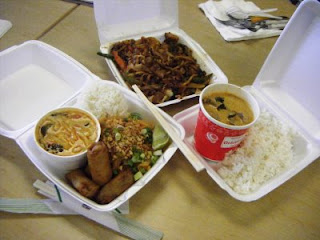
And you thought the take-out food was the thing that was going to kill you. Turns out the plastic in the container will leach into your food, mess with your hormones, and possibly give you cancer. See this post from the Educational Cyber Playground (and scroll to their discussion of #6 PS). It was based on this study published in Environmental Health Studies and conducted by people in white coats.

The good news is that the nasty chemicals only leach into your food and drinks if they are heated. So, as long as you get all your food and drink chilled, you won't have a problem.

Thursday, October 2, 2008

Beware the White Rabbit - Tainted Candy Found in US Stores


The tainted Chinese dairy product scandal has finally hit the U.S. Bags of the popular Chinese White Rabbit candy tainted with Melamine have been found on store shelves in Connecticut.

According to the International Herald Tribune

Melamine is a chemical additive at the heart of China's contaminated dairy scare. It is used to make plastics and fertilizers, but it is sometimes illegally mixed into food products, including milk, because its high levels of nitrogen can help fool tests that measure protein levels.

In September, Chinese authorities acknowledged that more than 53,000 Chinese infants had been sickened after consuming powdered baby formula that had been contaminated with melamine. Of that total, 13,000 were hospitalized and four have died.


Please don't feed your head.

Tuesday, September 16, 2008

Just one really scary word: Plastics


Plastics were the future, but they sucked. Okay, Bakelite was cool, but now you can only find it on stuff in yard sales and Ebay.

Now of course, thanks to the Internet, we know that plastics are truly evil and will destroy us all. Or something like that.

Honestly, I'd been trying to avoid thinking about this too hard because Cinderella uses plastic cups, eats with plastic utensils, and we wrap her up in Saran Wrap when she's naughty. I thought I'd wait until the people in white coats had figured out if this was something I really needed to worry about or not.

Turns out I do (and you should too).

As you've probably heard, the problem is with plastics that have bisphenol A, otherwise known as BPA. Some people in white coats did a really big study on humans and found that people with high levels of BPA had higher levels of heart disease, diabetes, and liver abnormalities.

Of course, like all scientific debates, there are two sides to this. On one side are researchers like the authors of the study and Frederick vom Saal, a reproductive scientist at the University of Missouri at Columbia who commented that the findings of the study were "the nail in the coffin" (hopefully he was referring to plastics and not us). Also on this side are people like Patricia Hunt, a geneticist at Washington State University who is researching possible links between BPA and birth defects, miscarriages, and other nasty stuff.

On the other side are chemical industry funded scientists who claim that there's absolutely nothing to worry about. The FDA apparently rests its claims that BPA-laden plastics pose no danger based on two chemical industry funded reports.

As worried consumers we can stop using BPA-laden plastic baby bottles, eyeglasses, DVD's, water bottles, and food containers. Or we could bug our government (or elect a new one) to force companies to get rid of this stuff.